How to Plan Paella Catering for Large Events
Planning paella catering for a big event? Here's what you need to know:
- Why Paella? It's a crowd-pleaser and doubles as live entertainment. Chefs prepare it in giant pans, offering a visual and aromatic experience.
- Guest Count: Most caterers require a minimum of 40 guests for full portions or 80 for cocktail portions.
- Menu Options: Choose from seafood, chicken with chorizo, or mushroom paella. Prices range from R149 to R160 per full portion (excluding VAT).
- Service Style: Full portions suit casual events, while cocktail portions work for formal gatherings.
- Logistics: Ensure the venue has a flat surface, permits for open-flame cooking (if needed), and space for large equipment.
- Budgeting: Factor in food, serving ware, and travel costs. For instance, a 100-guest event could cost around R18,550 (excluding VAT).
- Live Cooking: Paella is best enjoyed fresh, with cooking times ranging from 1¼ to 4 hours. Guests love watching the process, especially the prized crispy rice layer (socarrat).
Paella catering isn't just a meal - it's an experience. From planning portions to ensuring smooth logistics, this guide covers everything you need to make your event unforgettable.
Giant Paella Party at La Tienda
Define Event Requirements
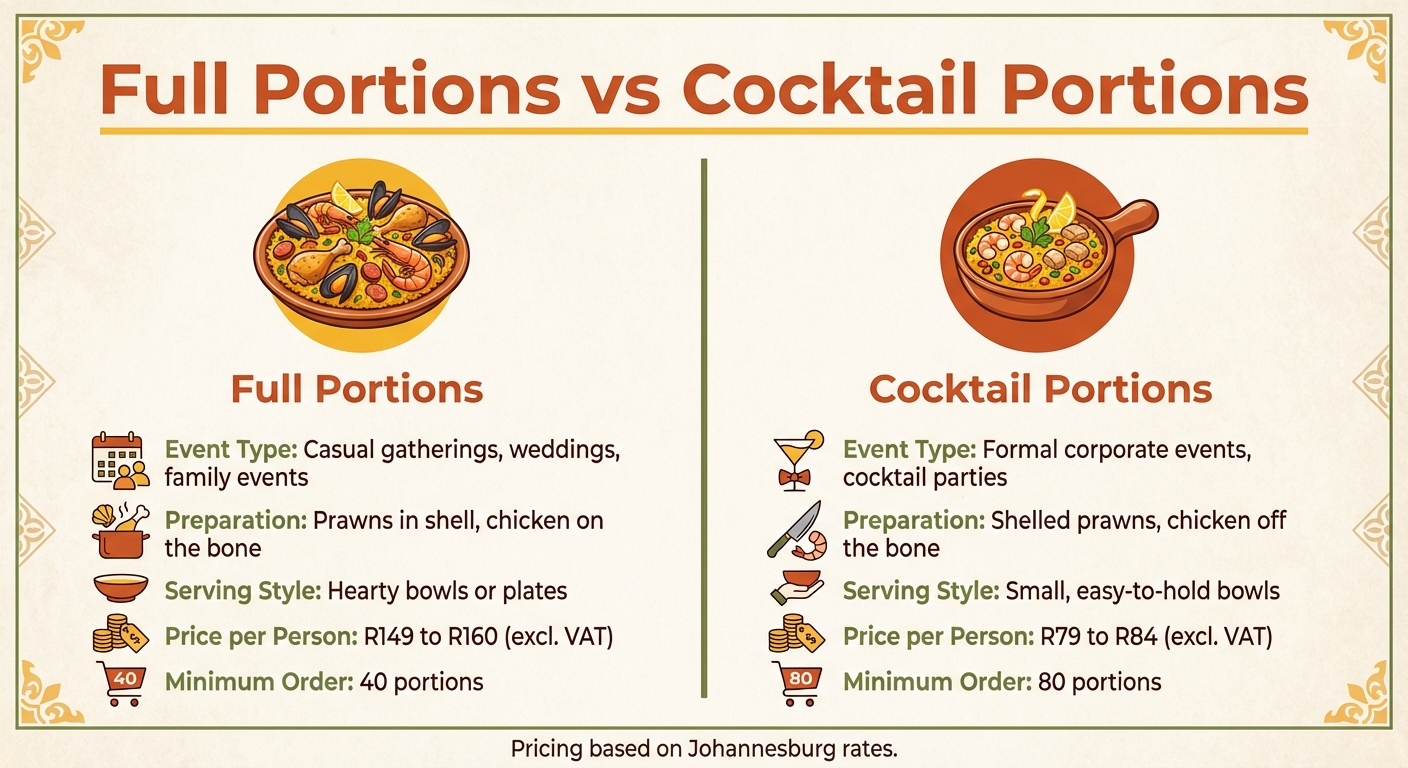
Full vs Cocktail Paella Portions: Event Planning Guide
Before locking in a paella caterer, it’s essential to outline your event needs. Whether you're planning a formal corporate event or a laid-back garden wedding, the type of gathering will influence everything - from portion sizes to cooking schedules. Once you’ve nailed down the event’s vibe, you can focus on aligning the culinary experience with your objectives.
Determine Event Objectives
Start by pinpointing the level of formality for your gathering. A corporate function with a formal tone often requires cocktail portions. In this case, caterers typically use shelled prawns and deboned chicken, served in compact bowls that are easy for guests to handle while mingling and networking.
On the other hand, casual events like family reunions or outdoor weddings lean towards full portions. Here, you’ll get prawns in their shells and chicken on the bone, offering a more flavourful and traditional experience.
For instance, if you’re hosting a sit-down dinner at 19:00, the chef will need to begin preparations well in advance, ensuring everything is ready by the time guests arrive for pre-dinner drinks. Once the event style is set, the next step is to estimate your guest count and dietary needs accurately.
Estimate Guest Numbers and Preferences
Getting the guest count right is critical. Many caterers require a minimum of 40 guests for full portions and 80 guests for cocktail portions. Use your RSVP list to firm up these numbers, and if you’re planning a buffet, consider adding a 50% buffer to account for seconds.
To accommodate dietary preferences, include a question about dietary restrictions in your RSVP process. This allows the caterer to prepare separate pans for seafood, chicken, and vegetarian options. Traditional Valencian paella doesn’t mix meat and seafood, making it easier to cater to guests with shellfish allergies or those who avoid meat.
Don’t forget to include vendors - like photographers and wedding planners - in your final headcount.
Select a Service Format
Your choice between full and cocktail portions will impact both the dining experience and your budget. Use the table below to compare the key features of each option:
| Feature | Full Portions | Cocktail Portions |
|---|---|---|
| Event Type | Casual gatherings, weddings, family events | Formal corporate events, cocktail parties |
| Preparation | Prawns in shell, chicken on the bone | Shelled prawns, chicken off the bone |
| Serving Style | Hearty bowls or plates | Small, easy-to-hold bowls |
| Price per Person | R149 to R160 (excl. VAT) | R79 to R84 (excl. VAT) |
| Minimum Order | 40 portions | 80 portions |
(Pricing is based on Johannesburg rates.)
When it comes to rice, caterers typically calculate 1/3 to 1/2 cup of uncooked rice per person. A well-sized paella pan can serve up to 500 people, making it ideal for large gatherings.
If your event is in a public space, check whether a city permit is required for open-flame cooking. It’s best to handle this at least 2–3 weeks before the event. Your venue should also provide a flat, stable cooking area with vehicle access for transporting heavy equipment.
These foundational decisions will pave the way for sourcing ingredients and managing the live cooking process, which will be explored in the next sections.
Plan Menu, Portions, and Budget
Once you’ve nailed down your event details, it’s time to focus on the menu, portion sizes, and budget. Careful planning ensures you don’t overspend while keeping your guests satisfied. These decisions are the foundation for successful catering.
Pick the Right Paella Options
Tutto Paella offers three delicious options: Seafood (prawns, calamari, mussels cooked in vegetable stock), Chicken (free-range chicken with chorizo, beans, and artichokes), and Mushroom (a mix of mushrooms with truffle oil and char-grilled fennel).
- The Seafood and Chicken paellas are priced at R160 per full portion or R84 per cocktail portion.
- The Mushroom paella is slightly more affordable at R149 for a full portion and R79 for a cocktail portion.
For mixed groups, it’s a good idea to cook seafood and meat paellas in separate pans to accommodate dietary restrictions. While the Chicken paella includes chorizo, all three options are naturally free of gluten, dairy, eggs, nuts, and soy.
Interestingly, about 90% of events opt for a "mixed" paella, combining chicken, chorizo, prawns, and mussels. On a tighter budget? The Mushroom option is a great choice that doesn’t sacrifice flavour.
Estimate Portions for Large Groups
Once you’ve chosen your paella types, the next step is to calculate portions. Start by confirming your final guest count through RSVPs. Tutto Paella has a minimum requirement of 40 guests for full portions and 80 guests for cocktail portions.
Here’s how the pan sizes work:
- The smallest pan serves 20 full portions or 40 cocktail portions.
- A large pan can handle up to 250 portions.
When planning, allocate 1/3 to 1/2 cup of uncooked rice per person. If you’re serving multiple types of paella, divide your guest count based on dietary preferences collected during RSVPs. For example, if 10 guests are vegetarian, dedicate one pan to Mushroom paella and split the rest between Seafood and Chicken.
To avoid waste, round guest numbers to match pan yields. For instance, if you’re catering for 85 guests with cocktail portions, you’ll need two pans (80 portions) plus a small buffer. Keep in mind, preparing a large pan of paella takes about 1 hour and 15 minutes.
Plan Your Catering Budget
Now that your menu and portions are sorted, it’s time to build a budget. Be sure to account for food costs, serving ware, and logistics. Below is a breakdown of costs per person:
| Cost Item | Full Portion | Cocktail Portion |
|---|---|---|
| Seafood Paella | R160 per person | R84 per person |
| Chicken Paella | R160 per person | R84 per person |
| Mushroom Paella | R149 per person | R79 per person |
| Enamelware (white/black trim, wooden cutlery, napkin) | R15.50 per person | R15.50 per person |
| Bio-ware Full (biodegradable bowl, wooden cutlery, napkin) | R9.50 per person | - |
| Bio-ware Cocktail (biodegradable bowl, wooden cutlery, napkin) | - | R8.50 per person |
(All prices exclude VAT)
Don’t forget to include travel and setup fees, which start at R1,600 for central Johannesburg. For venues further away, confirm the fee with your caterer. Final guest numbers and payment should be settled at least five working days before the event to avoid last-minute issues.
Here’s an example for a 100-guest event serving full portion Chicken paella with biodegradable ware:
- Food: 100 guests × R160 = R16,000
- Serving ware: 100 guests × R9.50 = R950
- Travel and setup: R1,600
- Subtotal (excl. VAT): R18,550
This method ensures you’ve accounted for every expense, so there are no surprises on the day.
Source Ingredients and Equipment
Getting the right ingredients and tools can make the difference between a decent paella and one that leaves everyone talking about it for weeks. When cooking for large groups, attention to detail becomes even more critical because any errors are magnified. Here's a breakdown of what you’ll need to create a flawless paella and how to set yourself up for success.
Use Fresh Ingredients
The foundation of any authentic paella is the rice. Short-grain varieties like Valencia, Senia, or Bomba are ideal because they absorb liquid beautifully without becoming mushy. If traditional Spanish rice isn’t available, Arborio or risotto rice can step in as good alternatives.
Flavour starts with a sofrito - a mixture of onion, garlic, and tomatoes cooked down to a rich base. You can also include leeks or bell peppers for added depth. Saffron is non-negotiable; it gives the dish its signature golden hue and a subtle earthy flavour. Smoked paprika and a hint of cayenne pepper round things off, adding warmth and complexity.
South Africa’s coastline offers an abundance of fresh seafood options - think Kingklip, Cape Salmon (Geelbek), stockfish, prawns, calamari tubes, and black mussels. Fresh mussels can even be foraged directly from the coast if regulations allow. For meat, bone-in chicken thighs, chorizo sausage, and pancetta or ham are classic choices. When it comes to the stock, a local fish stock works well, or you can simmer prawn shells and heads to create a rich, homemade version.
The prized caramelised crust of rice at the bottom of the pan, known as socarrat, depends on the quality of your ingredients and precise heat control. Once your ingredients are sorted, it’s time to focus on the equipment.
Ensure Proper Cooking Equipment
The paellera - a wide, shallow pan - is the cornerstone of paella-making. Its design allows for even liquid evaporation and helps develop the all-important socarrat. Investing in the right equipment ensures consistent results and enhances the overall experience.
For larger gatherings, high-output gas burners or tripod stands are essential. Some South African caterers even use a skottel braai for outdoor events, adding a local twist. The size of your pan should match your guest list. For example, a 32-inch pan can handle about five times a standard recipe, while professional catering pans typically serve 20 full portions or 40 cocktail portions.
You’ll also need large saucepans, a mortar for crushing saffron, and a grater for preparing the sofrito. Don’t forget foil or heavy towels to cover the pan during the resting period, which allows the flavours to meld together.
Safety should always be a priority. Secure gas cylinders properly and keep the cooking area clear of guest foot traffic to avoid accidents with hot pans. If you’re cooking in a public area, check ahead to see if a city permit is required for open-flame cooking.
Plan for Venue-Specific Requirements
Every venue comes with its own challenges, so it’s important to tailor your setup accordingly. Live paella cooking requires a flat, stable surface to ensure even heat distribution and prevent spills. Outdoor venues are ideal, but unpredictable weather - like wind or rain - can interfere with cooking. Always have a backup plan to maintain consistent heat.
Indoor or marquee venues bring other considerations. Good ventilation is crucial when using gas burners, and you may need to adapt your heat source to meet fire safety regulations. As Popaella advises:
If it's a public space, you may need a city permit to cook with fire. Always check ahead of time.
South Africa’s load-shedding can also throw a wrench in the works. If the venue relies on electricity for lighting or refrigeration, make sure there’s access to a backup generator. Additionally, confirm that the venue can accommodate the transport of heavy equipment.
The type of event you’re hosting will also influence ingredient preparation. For formal or corporate events, consider options like shelled prawns or boneless chicken to make it easier for guests to eat. For more casual outdoor gatherings, keeping the prawns in their shells and using bone-in chicken enhances flavour. Traditional paella rice should be cooked in a thin layer no thicker than "un ditet" (about 1.27 cm) to achieve the perfect texture.
If you’re cooking outdoors, protect your pan from wind during the final stages by covering it. Keep in mind that preparing paella for a large crowd can take 2 to 4 hours from start to finish, so plan extra time if conditions aren’t ideal. By adapting your approach to the venue, you’ll not only ensure safety but also maintain consistent cooking results, making service smooth and enjoyable for everyone involved.
sbb-itb-50226ce
Coordinate Logistics and Service Flow
Once your ingredients and equipment are ready, the next step is to ensure smooth logistics and service flow. Even the tastiest paella can lose its charm if the event feels chaotic, so careful planning is non-negotiable.
Create a Detailed Logistics Plan
Start with a clear timeline. Factor in some extra time for potential outdoor delays: around 1 hour 15 minutes for standard pans, up to 4 hours for very large pans, plus an additional 10 minutes to let the flavours settle.
Secure your equipment and ingredients well in advance - ideally 2–3 weeks before the event - to avoid last-minute hiccups. Confirm that the venue has everything you need, such as tables, waste bins, and serving stations. With these logistics in place, you can focus on tailoring the experience to your guests.
Accommodate Dietary and Preference Needs
Catering to dietary requirements is essential for a successful event. Use RSVP forms to gather information on allergies, intolerances, and restrictions like Halal, vegetarian, vegan, or gluten-free preferences. For example, a mushroom and truffle oil paella is a great vegetarian and vegan choice, while swapping seafood paella’s stock for vegetable stock makes it vegetarian-friendly.
Label each serving station with clear icons - V for Vegetarian, VG for Vegan, GF for Gluten-Free, and H for Halal. Train your staff to understand these dietary requirements and ingredient details so they can confidently answer questions and ensure proper separation of dishes.
Once dietary needs are covered, focus on streamlining the serving process.
Organise Efficient Service Styles
How you serve the paella can set the tone for the event. For casual gatherings, offer full portions with prawns in their shells and chicken on the bone. For formal or corporate events, opt for cocktail-style portions with shelled prawns and boneless chicken for easier dining.
At private events, avoid pre-orders to minimise errors. Instead, serve everyone their first portion before offering seconds. Strategically place serving stations to control queues and keep guests away from hot cooking areas. If you’re working with professional caterers, clarify what their service includes - such as setup, live cooking, serving, and cleanup - to avoid surprises.
Lastly, educate your guests about the socarrat, the crispy toasted rice at the bottom of the pan. While some might mistake it for burnt food, it’s actually a prized feature of authentic paella.
Design an Engaging Live Cooking Experience
Turn your paella catering into the highlight of the event. Paella’s charm isn’t just in its flavours - it’s in the show. Watching it come to life in massive pans, with enticing aromas wafting through the air, naturally pulls people in, creating a feast for both the eyes and the palate.
Position Cooking Stations Strategically
Set up your cooking station in a flat, secure spot where everything is within easy reach. If possible, take the setup outdoors. This not only allows guests to enjoy the mouth-watering smells and vibrant visuals safely but also keeps them at a comfortable distance from the heat. With large paellas taking 2 to 4 hours to cook, starting the process during the welcome drinks is a clever way to keep guests engaged right from the start. It’s not just about safety - it’s about creating a captivating culinary performance.
Choose Serving Ware That Matches the Mood
The way you serve your paella can elevate the experience and even reflect your event’s values. For weddings or elegant private gatherings, white enamelware with black trim paired with wooden cutlery adds a rustic yet refined touch. On the other hand, eco-conscious events like festivals or corporate functions might benefit from biodegradable bowls, offering a greener option without compromising on quality. Tailor your serving style to the event’s vibe: small cocktail bowls with shelled seafood work beautifully for formal mingling, while hearty portions with shell-on prawns are perfect for laid-back, sit-down affairs.
Make the Cooking Process an Event
Plan the cooking so guests can follow every stage of the process. From adding vibrant ingredients like saffron and peppers to the dramatic moment when the prized socarrat forms during the final resting period, each step can be a spectacle. Have the chef share fun tidbits, like the history of paella or how to pronounce it properly (“pie-eh-ya”). When the paella rests for the last 10 minutes, use this time to spotlight the socarrat - the golden, caramelised crust at the bottom of the pan that’s considered the ultimate bite. This interactive approach doesn’t just feed your guests; it entertains them, leaving a lasting impression.
Conclusion
When it comes to organising paella catering for large events, success hinges on thoughtful planning, top-notch ingredients, and the magic of live cooking. Start by outlining your event needs - figure out how many guests you’re hosting, decide between full portions for casual gatherings or smaller cocktail servings for formal occasions, and set a realistic budget. Pay close attention to scaling your ingredients accurately to maintain consistent flavours. These steps lay the groundwork for a seamless event.
Logistics are just as important. Make sure the venue can accommodate your setup, plan for any weather surprises, and source fresh, quality ingredients like medium- or short-grain rice such as Bomba or Arborio. Pair this with specialised gas-ring burners to ensure even heat distribution. With these preparations in place, the cooking itself becomes the star attraction.
Live cooking takes paella from simply being food to becoming entertainment. Set up cooking stations where guests can watch the process unfold, from the sizzling ingredients to the final resting period when the prized socarrat - that crunchy, caramelised layer at the bottom - forms.
Tutto Paella makes large-scale catering a breeze with their on-site, freshly made paella options. Choose from crowd-pleasing varieties like Seafood, Chicken with Chorizo, or Mushroom with Truffle Oil. They also offer flexible serving ware and handle all the logistics.
Want to create a memorable event? Check out Tutto Paella’s offerings, and let their team take care of the details while you enjoy watching your guests relish every bite - especially that irresistible socarrat.
FAQs
What do I need to consider when choosing a venue for paella catering?
To pull off a successful paella catering experience, your venue needs a flat and stable area - preferably outdoors - that can comfortably fit paella pans ranging from 35 cm to 80 cm in diameter. There should also be enough room for the chef, their assistants, and a serving line, so guests can enjoy the live cooking without feeling crowded.
Make sure there’s easy vehicle access for delivering the equipment, along with a power source or gas supply for the burners. If your event is in a public space, check whether you’ll need municipal permits for open-flame cooking and ensure you’re following local fire-safety rules. You’ll also want to think about practical details, like having water access nearby for cleaning and some form of shelter or wind protection to keep the cooking process steady.
Lastly, confirm the event address and any parking or setup restrictions well in advance. This can help you avoid unexpected costs, as travel and setup fees might depend on the location. Taking care of these details will make for a seamless and enjoyable paella catering experience.
How do I cater for dietary restrictions when serving paella?
Catering for dietary restrictions is a breeze with paella, as you can prepare several pans to meet different preferences. For instance, you could serve a seafood-only, chicken-and-chorizo, and vegetarian mushroom version, ensuring that guests with specific dietary needs or allergies have something delicious to enjoy. For those avoiding gluten, stick to naturally gluten-free rice, use a gluten-free broth, and skip any flour-based thickeners.
For vegan or vegetarian diners, a mushroom and truffle oil paella works beautifully. You can even boost the nutritional value by adding plant-based proteins like chickpeas or grilled tofu. If you're catering for halal or kosher guests, opt for certified free-range chicken and prepare it in a separate pan to meet dietary requirements. Clearly label each dish with icons such as seafood, meat, vegetarian, vegan, and gluten-free, and include allergen sheets highlighting common triggers like shellfish or nuts.
To avoid cross-contamination, use separate serving utensils for each dish and consider eco-friendly options like biodegradable bowls. This approach not only ensures safety but also aligns with the growing focus on sustainability in South Africa. Stick to metric measurements like kilograms and litres when preparing the dishes, and list prices in South African Rand (e.g., R160 per portion) for clarity.
What factors should I consider when planning the budget for paella catering?
When planning your budget for paella catering, start by figuring out the cost per guest. At Tutto Paella, a full-portion paella costs R160,00 per person, while cocktail-style servings are R84,00 per person, both excluding VAT. Keep in mind that there’s a minimum guest requirement of 40, as the smallest paella pan serves 20 full portions. For larger gatherings, additional or bigger pans may be required, which could increase the overall cost.
Don’t forget to include the travel and setup fee, which starts at R1 600,00 (excluding VAT) for central Johannesburg. If your venue is outside this area, it’s best to request a custom quote. Another cost to consider is the serving ware. You can choose enamelware at R15,50 per set or biodegradable bio-ware, which costs R9,50 per set for full portions and R8,50 per set for cocktail portions. Multiply these prices by the number of guests to get an accurate total.
When it comes to ingredients, careful planning is key to avoid waste or shortages. For example, a typical paella requires about ⅓–½ cup of uncooked rice per person, and you'll need around 2,25 cups of broth per cup of rice - or 3 cups if you’re using bomba rice. Don’t forget to add VAT (15%) to all costs, and round everything to the correct South African currency format (e.g., R1 600,00). Breaking your budget into these clear steps will help you create a realistic and well-organised plan for your event.